Monday, August 3, 2009

eTraveling Science Programs

Final Project Plan No. 1

Goal: Convert two in-class programs to Web-based programs to educate more students across our service territory on energy fundamentals.

Program One: Energy Lab, grades 3-5, electricity and magnetism

Plan: Create a video of an Energy Lab program. Upload a series of video segments based on various topics, such as: What is electricity? How does electricity travel? How do you make electricity using magnets? What is a conductor? How do you make a circuit? I'd also like to have an area that discusses the scientific method and how to use it to conduct circuit experiments.

Action Items:
  • Develop program - lecture and instructional aides. Done.
  • Videotape program. Done.
  • Select video feed and organize for an online format. Upload.


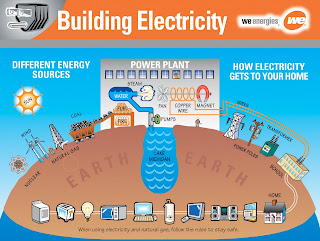
Program Two: Building Electricity, grades 1-2, energy

Plan: Create a VoiceThread that discusses different energy sources, uses of electrical power, and how electricity is made and sent to homes and schools.

Action Items:

  • Create screen graphics. This is what I've developed so far...

  • Develop lecture materials. Done.
  • Record VoiceThread and upload.

Sunday, August 2, 2009

Developing Social Media Strategy

"To develop a meaningful, engaging social media program, you need a methodology. You need to know why you’re active in social media, for whom you are active, and how success will be identified." (A quote from marketingprofs.com for my Webinar: Putting Why Before How: Seven Steps for Focusing Your Social Media Strategy, Presenter: Jason Baer.)

I enjoyed the Webinar format for a learning platform, because of the comment capability and exchange, instant gratification for getting your questions answered, and current ideas. The presentation shared some great insights on social media ("It's not a conversation. It's where the conversation takes place.") and provided some unique perspectives on designing a business case for social media. Here's my take on what was shared along with a few questions of wonder...

First Perspective: Reason first. Use tools last.

Interesting because didn't we do this in reverse? Although I mostly agree with this general idea, you do also have to be aware of what tools are out there, so that you do know how to accomplish your goals. Provided in the Webinar was a link to the Conversation Prism, which shows a wheel of current Web tools by categories, such as wikis, livecasting, video, social networks and more!

Second Perspective: Learn how your audience uses social media.

Fascinating because I don't recall us spending any time talking about how students use social media. Do you? We did receive statistics that students are using social media. We also received information on how social media is being used in the class. But did we discuss how students use social media? Are they creating social media, or just listening to conversations, or participating in it by chatting, or are they critiquing others' work, or are they a mixed user? I am very interested in learning more about this, and that's why I found this profiling tool from Forrester Research, Inc. to be intriguing. It's set up for companies, and has an 18-24 age group, which is fairly close to high school. In it the females are mostly spectators and joiners, whereas the male, although high in spectators as well, increase in the areas of creators and collectors. Fascinating! I wonder what our Web tools' class profile would be?


Third Perspective: Take your social media offline.

We continued to push our content online this course. But this brought out another important point, which our text referred to, what are you doing around your Web technology to ensure effective learning?

The course, although valuable, added even more questions...Plus, I think I'd like to try creating a Webinar.
Saturday, August 1, 2009

My Heart is in the Pines

It's the beginning of August, and school is right around the corner. Students are collecting crayons, pencils and glue, and I can't help but feel the buzz of excitement for another school year. And as we all scurry about to get ready, I couldn't help but enjoy the activity on my street.

Where I live, there's a school, one public school teacher, one religious school teacher, one homeschool teacher and one special education teacher, plus many houses filled with young children. And it was one of these children that caught my eye this week. Carrying a bag filled with rasberries, this particular boy was speeding home, running as fast as he could across the street, with his red superman cape streaming in the wind. I had to stop and revel in this great moment, for I realized the most important part of my personal learning network is not the expert or tool, but the child.

If I am going to teach young children, I must learn to wonder and play and be like them. They are ready to discover and explore, whereas I'm ready to pull my hair out with stress. They are overjoyed by their findings and want to share them with others, whereas I want to vent. They want to run to their future, whereas I mostly want to hide under the covers. And where's the joy of learning with bed bugs?!

The hero with the cape taught me a lot this week. He reminded me to listen and learn from children. What questions do they have? How do they learn best? What are they most interested in? He further made me wonder if any of us have a single student in our network? I know I don't (yet), and that's what I'm going to focus on, starting with my street. This week, in talking with my neighbors, I invited them to collect fire fly data and enter it on my blog. If students get excited about learning stuff and talk to other students, wouldn't that build our network too? Think of all the value they would bring with their inquisitive nature!

And so even though my goal for this course is to climb to the treetops, I realize that my heart is in the pines. I love children, and therefore, need to remember never to climb too far from them. For if I'm at the treetop, how can I see the little trees below? And if the little trees don't grow, how will the forest be sustained?

Thursday, July 30, 2009

Forest Fires and Grasshoppers

My husband and I are truly blessed. With a lot of help, the flames of July are finally dying down. But up until two days ago, the stress of the fire (losing two grandparents, selling his home - yeah!, moving, getting an offer on my house, looking for a place to live - still looking, wrecking a vehicle, going through the concern with my mom's accident and head injury, learning my friend totaled her moped and was rushed to the hospital, finishing another graduate class, working and just plain 'ol living) nearly overcame us...What saved me from the smoke? Here's the story...

I pulled in the driveway from work at 7:18 p.m. on Wednesday night. And there to greet me were three adorable neighbor kids. With my car door open, all three were scrunched in between my car and my husband's truck, with me still sitting in my front seat. What did we talk about? Teeth. And of course, I had to ask where the tooth went, and if it was going to grow back, and if a tooth was a bone, and if all bones grow the same. It was wonderful to wonder with these children. While still chatting science, I finally escaped my car seat. Then, out of nowhere, the littlest one came running out with his very own insect box. He set it down proudly before my husband and me, and announced that a grasshopper was inside. After he pointed out the grasshopper in the box, we had to ask, "What does a grasshopper do?" And without hesitation, he put his body in full motion and exclaimed, "Jump!"

And this, young grasshoppers, is exactly what we need to remind ourselves to continually do as science educators with web technology and tools. We must jump, not for ourselves, but for the kids. We must remember that even small jumps are important to take in the midst of a forest fire. And we must keep in mind that some of the best jumpers are kids. And therefore, we must learn to jump from them and with them.

So besides jumping in the fire, what did I learn? To me this week was about two things: 1) the power of the story and 2) tying that powerful story to the students. What I'm wondering about is if personal ties to the story will increase students' science understanding? I noticed in a lot of the great stories out there, the presenter often used personal pronouns, such as "her group," "I," or "what we found." Is there research available on this? Secondly, if the story creates a sense of unbelievable imagination will that increase students' science understanding? With no further ado, I hope you enjoy my opening twist on the Water Cycle: How Water Got Me to School...


Soon to be featured in my water cycle stories are the original driveway jumpers (aka neighbor kids).

Thursday, July 23, 2009

Watering My Tree

Have you ever put so much effort into something in hopes of getting something in return? As part of my work, I invested my heart and soul into developing and designing a new interactive education exhibit for children. After the Grand Opening event last weekend, I was invited to present my results. The meeting wasn't a cent short of exciting. (Left: A sneak peek of the exhibit)

So, what does my day job have to do with this class or my tree climb? Well, after weeks of building my personal learning network, it wasn't until this week that I realized a fundamental, yet missing, way to expand my professional development. To really advance my network into desired contact groups (and become one of the gang), I need to not only gather, but also produce. In other words, from time to time, I need water my tree.

For this entire class time, I've been reaching out to search for more knowledge, to gain more contacts, to learn more technology applications. The fact is that I've been looking only to others to network with me. This technique alone will not continually grow or sustain my network. I need to also find ways to network with "them."
So what I'm wondering is what if we all took the time to actually develop science education work products (i.e. our plans coming up next week) in a strategic way so that others would be interested... Would we create more opportunities for our students? Would we create positive recognition for our schools? And most significantly, would we engage students in science in a more effective and lasting way?

This networking twist isn't really new, but I had to re-learn it this week; and it was refreshing. It made me consider how many things I learned when I was little about networking. Growing up, thanks to my mother the master gardener, my sister and I spent the summer watering, weeding and growing the most beautiful vegetables and flowers. (Proof: we have 4-H Best of Show ribbons in both categories.) What's the network translation to now? We need to tend our network like a garden. Plant strategically. Water diligently. Tend often. Share the fruits of our labor. Connect with master gardeners. Bottom line, it is better to give than receive. And it is when we give of ourselves with creativity and ingenuity that our tree will shoot up to new heights.

And so, I must re-fill my water can.

Sunday, July 19, 2009

Need Input

Have you ever seen the movie Short Circuit? The robot (no. 5) malfunctions, comes "alive," and then, spends all its time trying to satisfy its cravings for input. No. 5's favorite saying was, "need input."

To understand any scientific problem, you need data. To discuss potential solutions to scientific problems, you need data. And ultimately, to solve any scientific problems, you need data.


Data may not be fun as solo numbers and information with units, but what the data can do is where the real fun begins. And when students can work to solve real problems with data, or collect their own data in the field, or participate with scientists in collecting data, that's when they'll start to see science come alive too!

In my Thermal Biology course, I developed a water cycle program for elementary students that utilized temperature data in a virtual field trip activity. In the summer edition of Science & Children, a project involving collecting data is featured for grades 4-6, called "Designing Payloads." The students worked with a local university to create a payload that collects temperature, relative humidity, and/or light intensity data in the atmosphere. Prior to coming up with their own design, the teacher worked with students to teach them how to use a data logger. When the construction of the payload was complete, the students with university scientists launched the payload, tracking it with a GPS unit. Wow!

As seen with this project, data collection, explanation and analysis can be a time-consuming project in the classroom with students. But because it can be very worthwhile if done in creative ways, I'm wondering how often data is used in the classroom to conduct science investigations vs. being reviewed by students online to only see science data?

Thursday, July 16, 2009

Networking Advice from Ants

I love fireflies. To me, they are nature's fireworks. And I've been waiting for them to appear since June. Last night, in a beautiful symphony of patterns, they lit up the night sky. My heart was aflutter; my friends had returned.

And isn't this what our personal learning network should be like too? People who light up our lives with exciting, new information that's helpful? This week, I finally got in touch with a technology-guru family member. And you know what? I now can download my video from my camera to my computer!

Ant Advice No. 1: To build the best ant hill, network with the entire ant family.

Upon reflection of my network activities this week, I realized an important methodology: build your network simultaneously in two directions, focusing on two main areas: people and information. For information this week, I learned that twitter is being used as a tool to notify customers of product sales. Thinking this was a good application, I tried to see if any science education stores were utilizing this Web application for informing clients of promotional science products. Acorn Naturalist, one of my favorites, Steve Spangler Science and eNasco did not utilize twitter; however, Steve Spangler does have a blog. As I continued to gather ways to network, I reached out to science educators and individuals in childhood learning, and reviewed the Science Channel and How Stuff Works to see what I could learn or follow. Ultimately, the best way for me to build myself professionally is to keep all potential learning avenues open to enhance my knowledge level (i.e. science abilities) and people contacts.

Ant Advice No. 2: Because the Queen is hungry, leverage all ant workers to carry the carbon-rich leaf food.

At times though there are some avenues for networking that must be avoided because they waste my most valuable resource: time. Therefore, I not only think that guiding principles are important for utilizing technology in the classroom, but also managing the use of my time spent with technology. In other words, I'm not willing to veg out in front of the computer reviewing hundreds of emails, without responding, or perusing many tweets that add no value to my professional development. Therefore, this week, I also was working on honing my management of technology tools so that I could use technology to my benefit, setting up rules or scheduling posts. Technology on automatic is effective and efficient.

Ant Advice No. 3: Nothing or no one is let into the ant hill, except what the ants allow.